 |
Technologies > Nonviral Biologic Expression
Proprietary Nonviral Biologic Expression TechnologiesProprietary intramuscular gene delivery technologies supporting sustained therapeutic protein expression, systemic secretion, and large-payload biologic delivery. Designed to support scalable, redosable, nonviral expression of biologics and immune-engager therapeutics in vivo. Available through: Strategic collaborations, sponsored evaluations, and licensing discussions. Provisional patent applications filed, GMP-manufactured nonviral formulation lots available for sponsored evaluation studies. Technology Proof PointsSelected non-confidential proof points supporting sustained expression, secretion, and large-payload delivery. 1. Sustained Expression Following Intramuscular DeliverySustained reporter-gene (luciferase) expression has been demonstrated following intramuscular nonviral delivery in both immunodeficient and immunocompetent mouse models. 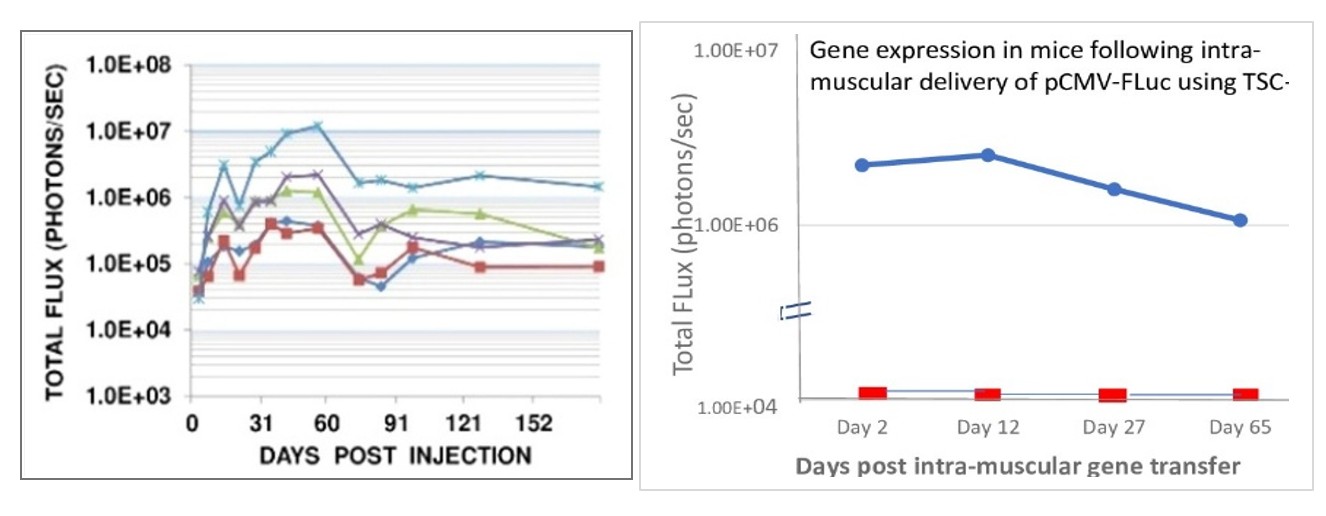
Figure 1: Sustained expression in NSG mice (left panel) and immunocompetent Balb/c mice (right panel).
2. Systemic Secretion and Localized Expression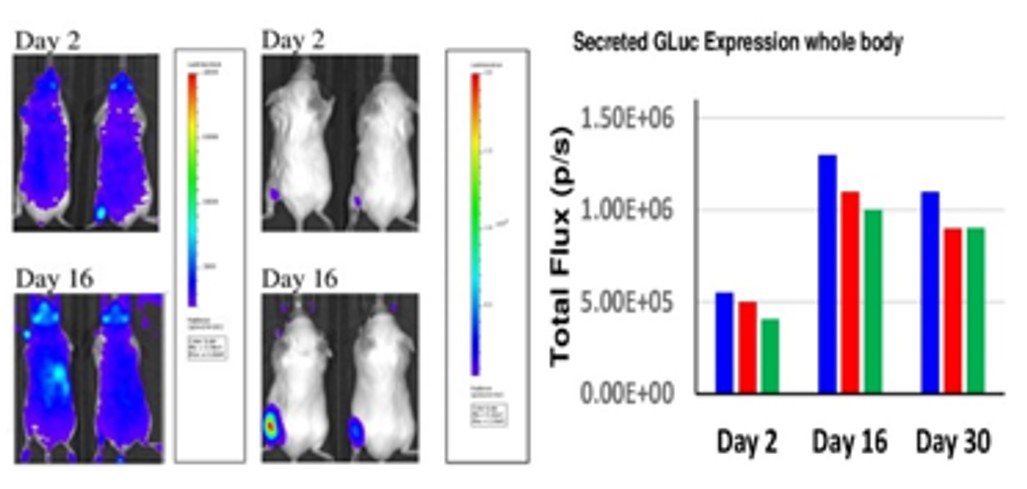
Figure 2: Left panel: systemic secreted Gaussia luciferase (GLuc) signal; Right panel: local intramuscular firefly luciferase (FLuc) signal. Expression vector – pUBC-GLuc-T2A-FLuc expresses secreted Gluc and intracellular FLuc.
3. Large-Payload Biologic Delivery (18.8 kb plasmid full-length human Dystrophin)Intramuscular delivery of a full-length human dystrophin expression (FL-hDys) plasmid in MDX mice demonstrates compatibility with large-payload biologic expression approaches. Immunohistochemistry confirms expected dystrophin co-localization with laminin at the sarcolemma. 18.8 kb expression vector co-expresses (FL-hDys) and Firefly luciferase. 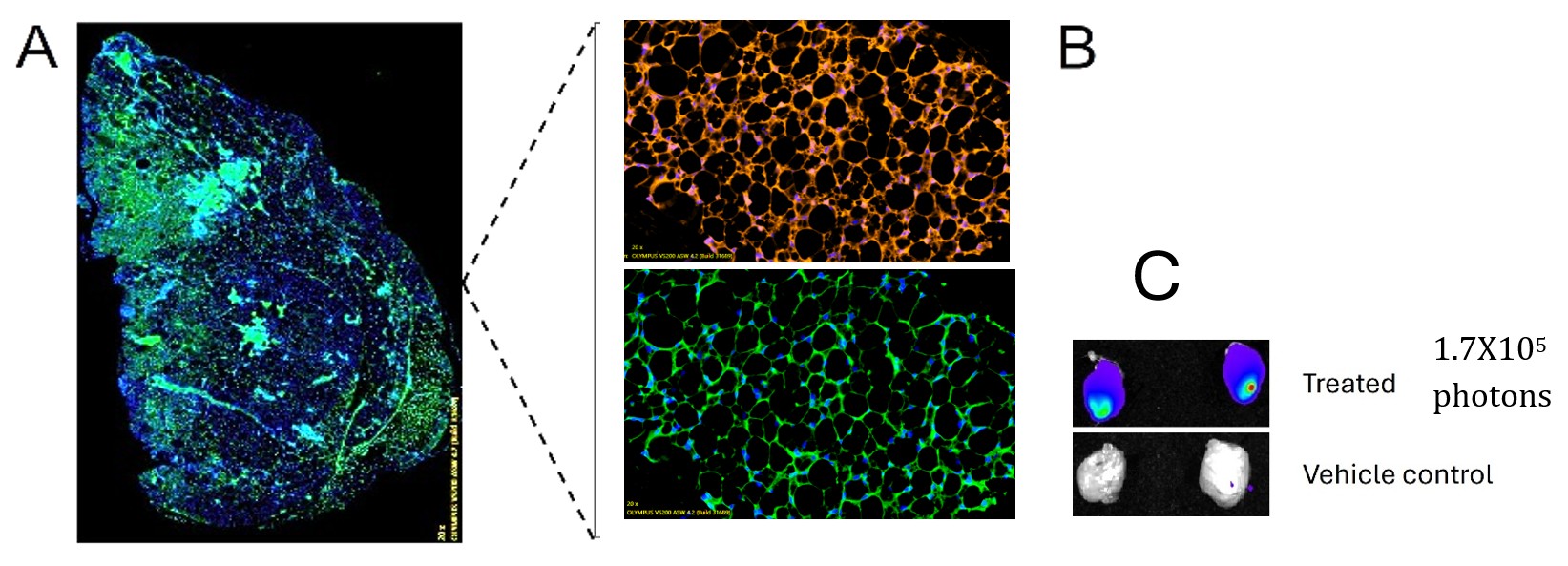
Figure 3: Full-length dystrophin delivery and muscle expression Panel C: Full-length human dystrophin was co-expressed with luciferase to visualize distribution by BLI in excised muscle then used for IHC.
Selected Translational ProgramsEndogenous immune engager expression programs for oncology applications are currently under translational development. Preliminary in vivo studies demonstrated significant HCC tumor growth inhibition following single-dose intramuscular delivery of a Nanoplasmid-expressed immune engager in a mouse xenograft model of HCC (hepatocellular carcinoma).
Selected metrics: 68% TGI at Day 11 (p=0.026); 61% endpoint TGI at Day 28 (p=0.033); sustained BiKE detected in serum, N=6 mice, single dose.
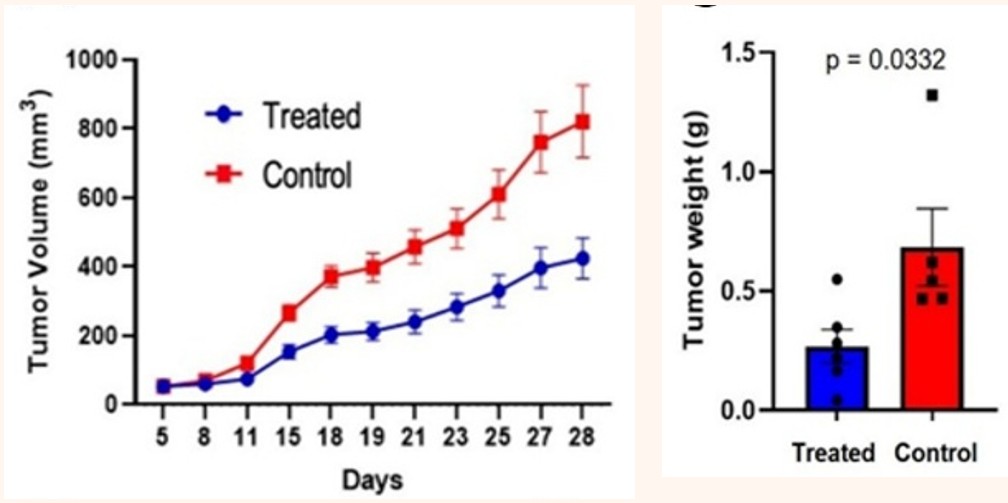
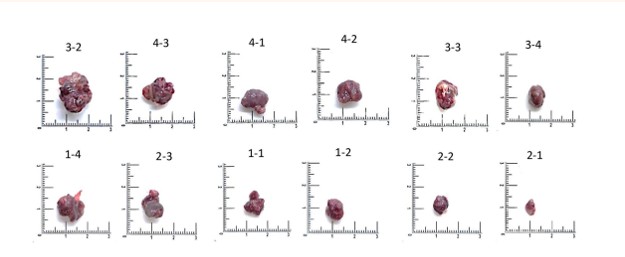
Figure 4: Photograph of excised tumors on day 28. Top row: untreated; Bottom row: treated mice.
Future Direction: Translational EvaluationTargeting Systems is advancing its nonviral biologic-expression platform toward translational large-animal evaluation and IND-enabling development. Planned future studies include translational evaluation of intramuscular nonviral gene delivery formulations in large-animal models, with readouts including expression kinetics, tolerability, redosing feasibility, anti-drug antibody response, cytokine monitoring, and systemic exposure of secreted biologics. Targeting Systems’ founder has been invited to serve as an affiliate scientist with the Southwest National Primate Research Center, supporting future translational discussions involving non-human primate (NHP) study design. GMP-manufactured nonviral formulation lots are available for sponsored evaluation studies and licensing discussions. The platform also supports large-payload biologic expression. Delivery of a full-length human dystrophin expression cassette highlights potential applicability beyond oncology, including rare-disease gene therapy programs involving large therapeutic genes. Exploratory non-GLP mouse studies have shown encouraging preliminary tolerability. Serum chemistry remained within expected ranges after long-term expression, and cytokine profiling showed no evidence of uncontrolled cytokine-release syndrome; observed cytokine changes were consistent with controlled immune activation and NK-cell engagement. Additional Translational Oncology ProgramsTargeting Systems is also exploring endogenous expression of immune engagers for hematologic malignancies and additional solid-tumor applications using the same nonviral biologic-expression platform. Additional oncology-focused translational programs are currently under evaluation for strategic collaboration opportunities. Our TeamLean core team supported by domain experts in vector design, immunology, oncology, gene therapy, regulatory strategy, and business development.
Strategic Advisors
Prior National Science Foundation (NSF)-Supported R&D Programs
Interested in Strategic Collaborations or Evaluation Partnerships?Interested in learning more about our nonviral biologic expression technologies? |